Liberia Readings

I’ve come across a couple of articles recently that are must-reads for anyone interested in Liberia. The situation there remains awful, though better than it was a month ago.

First there’s “Liberia is chained to its past,” by Roger Morris, who was an NSC adviser for Johnson and Nixon. (This article is in the Toronto Globe and Mail; he wrote a very similar one for the L.A. Times that I can’t find a direct link to.) It is a deeply cynical survey of Liberia’s history and America’s involvement thereof, but that doesn’t mean it’s not accurate. Liberia’s history could make a cynic out of anybody. He begins:

As the Liberian civil war flickered across the news this summer, there was at least a glimpse of its appalling cost. Untold dead and dying, atrocities, armies of gang-pressed children, half a nation’s people left refugees — it all seemed to be symbolized by a photo of a frantic-eyed, eight-year-old boy crouching on a rubble-strewn street in Monrovia, automatic weapon cradled in his small arms, a ragged teddy bear tucked in his backpack.

Liberia’s tragedy grew relentlessly out of its shrouded history, a past largely shaped by the United States. The freed American slaves who founded it in 1821, sponsored by a white America glad to resettle unwanted citizenry of colour, promptly mimicked the antebellum South they had fled, an irony with fateful consequences.

What follows is a litany of woe with a constant theme — selfish U.S. involvement with no eye for the consequences on Liberia itself. Most of it was review for me, though I hadn’t heard this before:

Covertly, Liberia also became the centre of an earlier war on terrorism, this one against Libya. Monrovia was a principal CIA base for clandestine operations targeting the regime of Moammar Gadhafi, climaxing in the 1986 U.S. bombing raid on Tripoli . . . Roberts Field was also a major transit point in the late 1980s for CIA resupply of the UNITA guerrillas fighting the Angolan government.

Morris has big problems with U.S. policy toward Liberia at every step, up to the present day:

The Bush administration’s new interest in the country, coinciding with the President’s trip to Africa and the latest civil turmoil, is no less cynical. Mr. Bush’s call for Mr. Taylor’s departure can be traced to a revived U.S. stake in a dependable regime in Liberia — to the need for it again as a listening post in an open-ended war on terror, and not least as part of regional stability in a West Africa emerging as a major supplier of oil and natural gas.

This is where I�m not sure I agree, though. I wouldn’t characterize Bush’s recent actions with respect to Liberia as “interest,” but rather “doing as little as he absolutely must.” There’s something to the regional stability argument, but the cornerstone to all of that is Nigeria, not Liberia. If the U.S. was really interested in milking Liberia as a jumping-off point for local power politics and the W on T, they sure have an odd way of going about it. This in turn makes me wonder about some of Morris’ other assertions, like the extent of Liberia’s usefulness in the Cold War as quoted above. Thing is, I can’t imagine what he’d have to gain by spinning things in this particular way right now. If anything, the fact that he’s writing so vehemently suggests that he’s looking for an outlet to speak some truths that have been eating at him for a while. Is there an angle here that I’m missing?

Second article: “Years of War Leave Liberia Hollow,” by Emily Wax. I hesitate to use the word, but there�s no way around it: this piece is heartbreaking. It’s a short profile of postwar Liberia and the wreckage that’s been left behind. There’s nothing left. Iraq is a paradise in comparison.

“To be very honest, for the past 14 years we haven’t been able to protect our citizens, and it breaks us,” said Moses Gelear Sayon Jr., 53, director of the National Firefighters of Liberia. “We used to have 14 firetrucks. We used to have land-line phones — yes, phones. Imagine! Everything was spoiled and stolen. It’s a disgrace to national service.”

The firefighters said they would reactivate the station and displayed a letter they had written to a firefighters association in the United States. They were joining the other fire stations around the capital, all looted and wrecked, in appealing to U.N. special envoy for funds to start a new fire department for Liberia.

The men talked about reviving a fire prevention program. Since they had no equipment, they said, they could teach fire prevention with a few matches and some paper.

“Drop and roll, at least we can teach that,” said Baryogar, who was in exile in Ghana when he watched televised scenes of U.S. firefighters helping save lives on Sept. 11, 2001. He said he just started weeping right there in the bar, over his beer.

“I kept thinking about Liberia,” he said, looking choked up, “and all those people we could have saved over the years.”

Where’s a Salam Pax for Liberia? One is not likely to arise in a country without computers, phones, electricity, or a majority of literate citizens. We spend billions to rebuild Iraq, most of it going toward the military occupation, while a fraction of that amount could put us well on the way toward repaying a debt borne of decades of callous indifference.

The hard pill to swallow is that that sort of help is not likely to come from the U.S. without the same sort of conditions as in years past, and the bitter irony is that even that sort of help would be better for Liberia than no help at all. This is the kind of situation that makes me glad there’s a United Nations, and wish that they had a stronger hand to play for helping nations in such extreme distress.

While writing this I keep thinking back to something on Unqualified Offerings from back in July (Jim writes in response to an article by Stephen Chapman):

Chapman notes that certain quarters denounce any reluctance to commit troops to Liberia as stemming from racism. I’ve said it before and I’ll say it again: the enthusiasm for this type of adventure is often driven by racism — by a blithe conviction that these swarthy little foreigners with their tribes and factions and weapons cannot possibly be serious about their own goals, and that it will be a simple matter for the Great White Fathers and Mothers to put them in Time Out and then get them to behave. Don’t go there.

I have some problems with this. First of all, “enthusiasm” and “adventure” are poorly chosen words — no one is excited about the situation, and there’s nothing adventuresome about trying to avert even more tragedy and pick up the pieces of a broken nation. I’m not sure who, exactly, he’s ascribing blithe racist convictions to. Everyone that I’ve met with a concern for Liberia’s future, the NGO relief workers who are the tip of any foreign aid spear, are characterized not by we-know-better racism, but deep and admirable humility. They understand that, like the rest of West Africa, Liberia is a place working out from under a crippling historical burden. Give a bunch of white folks a couple centuries of slave trade followed by decades of exploitative colonialism, and they’ll be struggling for years against poverty and warlords and tribalism too. Give Liberians a clean slate, and of course they�d be able to take care of themselves without any help from the rest of the world, thank you very much. Unfortunately, history provides no clean slates, and doesn’t grant us or them that luxury.

Three Things for Friday

  • Recommended reading: “The Falling Man“, by Tom Junod, in this month’s Esquire. The title refers to the infamous photograph of one of the many who jumped from the upper stories of the Trade Center towers. This is a hard subject, and a hard read, but it’s a worthwhile and challenging look at an unspoken-of aspect of September 11, as well as a reflection on the role of the photographer in times of crisis and tragedy. Hat tips to Agitator and Fresh Bilge.
  • On a lighter note, Jim Henley has found another quiz — this time “What legendary creature are you?” He’s a muse, I’m a phoenix, which is kind of like a muse but with wings and fire and stuff. Unfortunately, Jim somehow missed the fact that on the same site is a “Which Babylon 5 character are you?” quiz, which is much cooler. Of course, it turns out that I’m Londo Mollari . . . and I only cheated on one question!
  • As everyone has heard by now, Johnny Cash died. I remember last year when my friend Lee called me over to the computer in our office. “You’ve got to see this,” he said. He played the video to “Hurt,” which was the sort of thing, both musically and visually, that smacks you out of your ordinary day and sears itself onto your memory. A fitting if haunting end to a legendary career.

OK, Gimme Dean

After twisting and turning for a while, I’m going to throw my considerable political clout in support of Howard Dean. He has burbled to the top of two important piles: The One I Like the Best and The One Who’s Most Electable. Usually that second pile wouldn’t be as important in the primaries, but 2004 is going to be a triage election — the primary goal is to get Bush out before he can do four more years of damage to our credibility, economy, and security.

Dean cons:

  1. He’s left of the population at large. OK by me, but it hurts him on electability.
  2. He looks like a smartass.

Dean pros:

  1. He looks like a smartass. That is to say, he projects confidence to the point of cockiness, but confidence nonetheless.
  2. In other ways, as well, he looks presidential. I don’t know how much of a difference that makes, but in the unconscious statistical soup of the American populace, I’ll bet the numbers add up.
  3. He’s more or less in line with my politics.
  4. He was against the war. Easy for him, since he wasn’t in the Congress having to wrestle with direct political consequences, but still. Guys like Kerry had the power to make things difficult for Bush, to demand information and argument instead of bluster and smokescreens. They dropped the ball. Besides simply being right, Dean gains rhetorical points for not having to finesse or recategorize his war stance now.
  5. His people are running a killer campaign. This is so refreshing. Watching Democrats flounder around and squander opportunities has been a painful pasttime since the Gore campaign. Finally somebody’s getting it right.

What about Clark? I like him better as a running mate, filling in Dean’s foreign policy and military gaps, but I don’t know a lot about him. And (yesterday’s news buzz aside) it’s a moot point until he announces one way or the other.

9/11

Our apartment is on the eighth floor of a meatloaf-shaped building facing southeast over Route 50 in Arlington, Virginia. The view is quite pleasant, thanks to the many trees both outside our big windows and blanketing Fort Myer across the road. If you get close enough to the glass you can see the Washington Monument to the left.

I remember lying dreamily in bed two years ago this morning, bathed in sunlight and listening to Suanna getting ready for work. I was teaching Monday-Wednesday-Friday and it was a Tuesday, so I was looking forward to a lazy morning bike ride followed by some paper grading. NPR was crackling from the bedside clock radio; the Morning Edition commentator was saying something about a plane flying into one of the World Trade Center towers. This was still early in the day, before any sense of alarm had built up. We figured they meant a little prop plane of some kind.

Forty minutes later I was lacing up my shoes and trying to decide where to bike to that morning. I had settled on a short loop (down the Potomac, up past the Pentagon, and back again) when Suanna called from work and told me to turn on the TV.

A few minutes later, I was watching the towers burn when a big boom rattled all the windows. My first thought was that something terrible had happened, and my second was that I was just being paranoid – letting what was going on in New York color my view. A little while later a big cloud of smoke appeared behind the trees, from somewhere on the other side of Arlington Cemetery. I closed my eyes and summoned a mental map, trying to figure out what had been hit. I realized it must be the Pentagon.

At that moment, and for a little while after, it seemed possible that this was just the beginning, that planes were going to start crashing into things all across the country, that society was going to collapse, that it was the end of the world.

The world did end for over three thousand souls that death swallowed in the attacks that day: Aamoth to Zukelman, Amundson to Zheng, Adams to White. Not for the rest of us. Our work is to build up from the destruction a world better and wiser than it was, both for our sakes and to honor their memories. It has been hard work, dogged by fear. “Nous sommes tous Americains.” The world is watching. Let’s keep trying.

Pretty in Pink

In just one month, we’re going to have a new twenty dollar bill. Here are pictures of the front and back. There’s a bit of green, a bit of blue, and a bit of what they’re calling “peach.” The same part of me is mildly excited about this as the one that finds the state quarters rather nifty, but more so – our banknotes have been long, long overdue for a change. The semiotic value of having an easy association of “green” with “cash” is far outweighed by the points we lose for having super-boring currency.

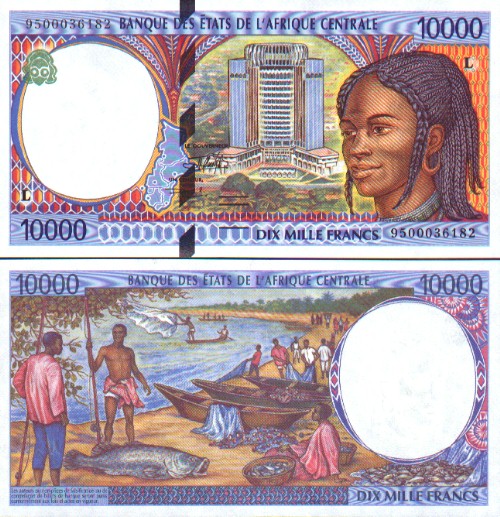
The new bill has a slightly-bigger picture of Jackson, which, as with Franklin and the $5, makes him look a little bit more like a movie star. Most of the changes are for anti-counterfeiting and not aesthetic reasons, though. It looks better, but we’re not going to win any international competitions. This is in keeping with the Rule of Currency Attractiveness, which states that the higher the GDP of a country, the less bold and interesting its banknote design. (Look how cool Gabon’s bills are.) European countries have often bucked that trend – Dutch guilders get high marks – but those are getting all gobbled up by Euros now. Best currency-portrait award goes to Australia, though. Is it me or do all those people look vaguely angry?

Firefly Reborn

This news may be a little old, but I just found out today, via Ampersand who got it via Long Story; Short Pier. Here ’tis:

The short-lived TV series “Firefly” is moving to the big screen. After taking his “Buffy the Vampire Slayer” feature film and turning it into a successful TV series, Joss Whedon is about to do the reverse with another one of his creations. Whedon has teamed with Universal Pictures to turn “Firefly,” a TV cult favorite, into a feature film.

In addition to having adapted it for the big screen, Whedon will also make his feature directorial debut with the project. Plans are to see “Firefly” go into production in first-quarter 2004.

I was weirded out by the show’s whole western-sci-fi spin for the first couple episodes, but that’s all the time it took for the killer ensemble cast and sharp dialogue to win me over. Firefly died a tragically premature death — it was just working out its kinks and becoming something wonderful. Its best two or three episodes stand right up there with anything Joss wrote for Buffy. I’m a little worried that the things that made the show so good won’t translate as well to the big screen. And I’m worried that Joss won’t be as good a director as he is a writer. But I’ll still be tracking the film’s development like a class-A fanboy.

New York Underground

Teresa Nielsen Hayden, of Making Light, is at her tippy-top best with “The fabric of the city.” She begins:

The city is fascinating—perverse, complex, sometimes maddening, sometimes startlingly beautiful, full of the middles of stories whose beginnings and ends you never see. It accommodates the press of its population by doing what it does quickly. This is a big source of visitor interaction problems. They expect that slow newbie-friendly graphical user interface they’re used to from suburban malls, fast-food chain outlets, and the interstate highway system. What they get is a Greek immigrant who expects them to rattle off “butteredpoppyseedbagel coffeelightnosugar” and not need to be told that now is when you pay for it. We’re not unfriendly. We just know there are people in line behind us.

. . . and segues from there to a whirlwind tour of a couple dozen useful, bizarre, and wonderful web sites devoted to NYC miscellany, with a special focus on the hidden corners of NYC subway system. If it was a static web page, the links alone that she provides would be an impressive resource, but she glues it all together with her own observations and musings, which makes it even better.

Backgammon and Luck

Friend and anti-hyphen crusader Robb Fynewevermuyskens wrote some pointed and excellent questions about backgammon in the comments of this entry. My response ended up being rather lengthy, so I’m putting it up here as a new entry. Here’s Robb:

My assumption is that, at a certain point, most backgammon players have roughly similar skills. That is to say, given a certain board set-up and dice roll, there’d be very few “best” choices of moves, allowing for personal choice (in aggressiveness or defensiveness). That being the case, it seems to me the games themselves are determined entirely (short of a player making a “mistake”) by chance, i.e. by the roll of the dice. Do you find this to be true?

Some background: I’ve always grouped chess and backgammon together in my mind as Cool, Old-School Games that are somehow superior to games of my generation (i.e. Clue, Monopoly, etc.). Part of this is the vastly superior pieces (though maybe Sorry!(tm) would be as cool if it had solid, weighted pieces and a hardwood, parque board. . .naa). Most of the superiority, however, comes from their simplicity of play versus their complexity of strategy. Anyone can learn to play chess and backgammon, but superior players will beat inferior players on a regular basis. Which brings me back to my question. How much more superior does one have to be at backgammon to consistently beat their opponent? Or does that not come into play once you’ve learned some basic strategy, because ultimatly the dice determine the winner? Maybe that’s an exaggeration. The dice rolls being roughly the same (which theoretically they should), should produce the more skilled player as winner most of the time. But I recall an instance at a chess tournement when, right after being mated, a player jumped out of his seat and yelled, “You got so lucky!” Well, that’s absurd. There’s no luck in chess. So I’m wondering, does your enjoyment of backgammon necessarily involve an excitement of the randomness of the dice? Does backgammon even lend itself to competition, or is it more like the buzz generated around a craps table? If it is competitive, isn’t it horribly disappointing to have a solid lead evaporate with just a few rolls of the dice?

Briefly: yes, the enjoyment of backgammon necessarily involves excitement stemming from the randomness of the dice. But it is not the case that the results become essentially random when the players all arrive at a sort of skills plateau. The reason for this is that there is no such plateau; rather, there is the constant possibility for incremental improvement in strategy and play that’s a hallmark of all great strategy games. The luck factor obscures it somewhat, but backgammon has a definite “lifetime to master” continuum of skill levels.

It is true that a rank amateur could win a game against a top-ranked player, given enough luck — something that would never happen in chess. This is not because there isn’t any subtlety to the strategy, though. Some moves are obvious or forced, but in most cases there are a hundreds of ways to play a particular roll. The thing is, the relative merits of, say, the best half-dozen moves in a given situation are often rather slight. Backgammon software will analyze a game and report its “equity,” the odds of either side winning from a given position. At the beginning of the game each player’s equity is 50%. Very often, the difference between the best possible move (according to the computer) and the second-best move is less than a percentage point of equity. So anything can happen, but over time (and even in a single game, there are dozens of rolls) making the better moves adds up significantly.

No serious backgammon player would play without the doubling cube, which increases strategy by an order of magnitude. The numbers are fairly straightforward: for reasons that my math-impaired brain takes somewhat on faith, if you feel that you have 25% equity in a game, you should accept the cube if offered, thus doubling the point-value or stakes of the game (the alternative would be to decline, which grants your opponent the win at the current point value). Of course, knowing what your equity is at any given moment is an incredibly complex and subtle operation. It’s the sort of thing that computers can do well in most cases, but sometimes can’t beause they’re not fast enough to evaluate them through brute force in a reasonable amount of time. The strategy on deciding when to offer the cube in the first place is even more complex because of issues revolving around something called volatility, which is something I still know very little about.

To make the cube make sense you either have to be playing for money, in which case the effect of doubled stakes is obvious, or be playing a match to a finite number of points. Five and seven point matches are common because you can usually finish them in under an hour. While an amateur might beat a backgammon master in a single game, it’s extremely unlikely that he’d win an entire match — the longer the match, the more clearly the superior player will become evident. Give me a smart gamer who has just learned backgammon, and I wouldn’t be willing to bet a hundred bucks that I’d beat him in one game. But I’d happily bet $900 that I’d win a nine-point match.

When you?re looking at equity numbers it’s easy to forget that different styles of play can have a big effect in countless imperceptible ways. My favorite backgammon opponents at Common Grounds are Steve and French; the three of us have played hundreds of games against each other. There is a definite pattern in those games: French beats me more than I beat him, I beat Steve more than he beats me, but Steve has a definite edge over French. The trend has been continuing far too long for it to be just coincidence, and we’re all of roughly equal ability, so clearly my style of play must, in some way I’m not even aware of, work better against Steve than it does against French.

“Does backgammon even lend itself to competition, or is it more like the buzz generated around a craps table?” The answer would be “yes” and “yes.” There is the thrill of knowing that anything can happen, but there are also tangible rewards for studying the game and playing thoughtfully. That part’s easy to forget when you’re in the middle of an inexplicable slump, at which point it’s very easy to conclude that it is just a stupid luck game. Backgammon constantly creates those situations where the winner thinks the game was decided by strategy, while the loser believes that the dice were dead-set against her. Nine times out of ten, the winner’s the one with the right idea.

Jai Must Go

Watching Queer Eye for the Straight Guy has been a guilty pleasure at Polytropos HQ; we’ve caught about four episodes. I haven’t been tracking any buzz about the show, but I get the general sense that there is some buzz, and that I probably don’t have to explain its premise here. Suffice it to say that it has all the watching-a-train-wreck addictive trappings of the rest of reality television, but, perhaps because it’s on Bravo, is marginally more well done.

Let me get to the point: they have got to get rid of Jai. (It’s pronounced “Jay,” so the spelling thing is a strike against him right there.) Before last Thursday’s episode I believed this because he was superfluous; now I believe that he is largely superfluous and incompetent.

The members of the “Fab Five” each have their specialties, and for four of the five, these are well-defined, concrete, and helpful. Grooming. Food & Wine. Fashion. Interior Design. And then there’s Jai, whose speciality is “Culture.” What does that encompass, exactly? Clearly the show’s writers have had to scramble to answer that question anew for each episode. Usually Jai’s role is to give advice on social mores that even the suavity-deprived guinea pigs featured each week would find painfully obvious. In the premiere, Jai helped Butch (a friend-of-friends and fellow former Calvin denizen) by encouraging him to make eye contact with folks at his art show. In another episode, all he did was teach the guy how to say “I love you” to his girlfriend in Armenian, her native tongue. While the other four stay busy actually transforming the straight guy, and his apartment, into something new, Jai wallows in irrelevancy.

Last Thursday he had his chance. Josh, the subject, needed to learn how to dance in order to please his girlfriend. At last, something concrete that clearly lay within Jai’s purview! A whole segment of the episode was devoted to his instructional session at the local gym. And the result? Complete and utter failure. The genius of the show is the final segment where the Five gets to watch from afar as the poor stupid straight guy tries to carry out their instructions in his pivotal date or appointment or whatever. Josh comported himself admirably at ever turn, except for when he hit the dance floor. At that point it became clear that Jai had not succeeded in carrying out his appointed task of giving the guy rhythm, or any sort of dancing clues whatsoever.

The chief problem lies not with Jai himself, but with the whole notion of having a “Culture” expert at all. But the show has painted itself into a corner — they can’t simply drop the position, because then they would have to call themselves the Fab Four, which they cannot do for obvious reasons. The burden of the Culture guru is thus to make relevant a hopelessly diffuse category — it’s a burden that Jai has proved thus far unable to bear.

In my book, he gets one more chance. If he fails to demonstrably assist the subject of this week’s episode, then I’m going to have to give this issue the careful attention it richly deserves, and kick my evict-Jai campaign into high gear. Who’s with me?